Faith over Fear Sleeve SVG Design: Graphics for T-Shirt Designs
First Impression: A Quietly Confident Visual Statement
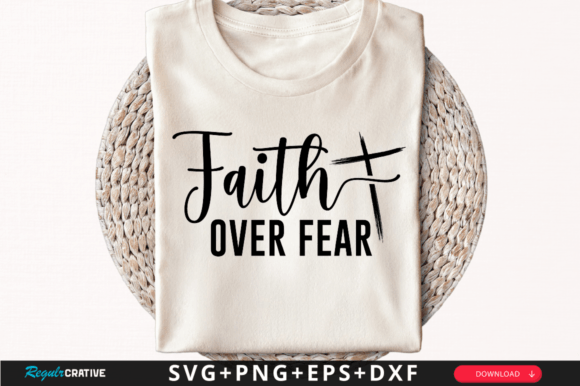
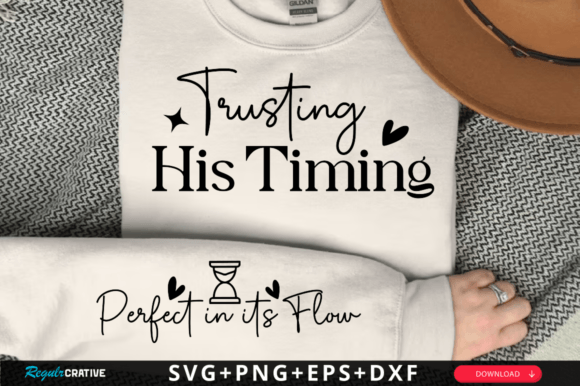
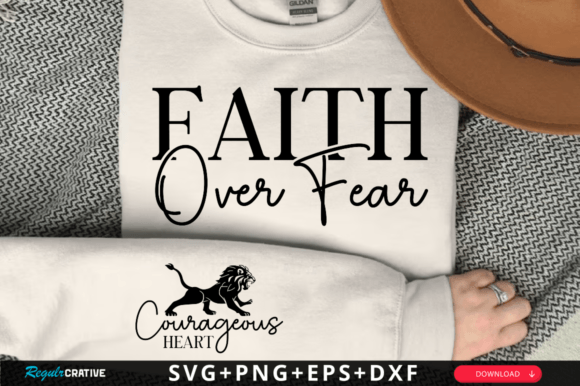
Opening the Faith over Fear Sleeve SVG Design file, I immediately notice its balanced asymmetry—clean linework, subtle curvature in the sleeve motif, and a gentle, hand-drawn weight to the lettering. It doesn’t shout; it resonates. This isn’t a loud motivational poster—it’s a quiet anchor. For a client project like a small-batch wellness brand launching a “Courage Collection” of handmade apparel and ceramic mugs, this graphic design asset lands with emotional precision. The phrase Faith over Fear is legible at a glance but never rigid—its rhythm feels human, not algorithmic. That’s rare in mass-market SVG designs.
Where It Shines: Real-World Application Across Touchpoints
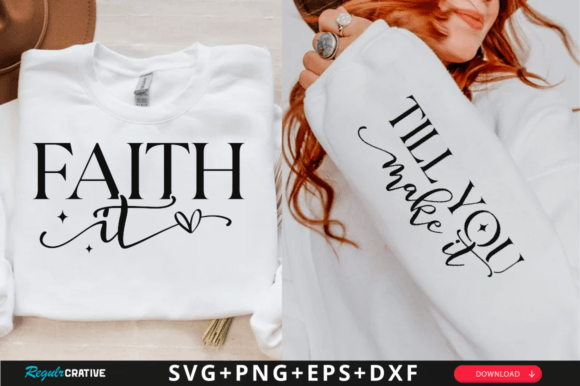
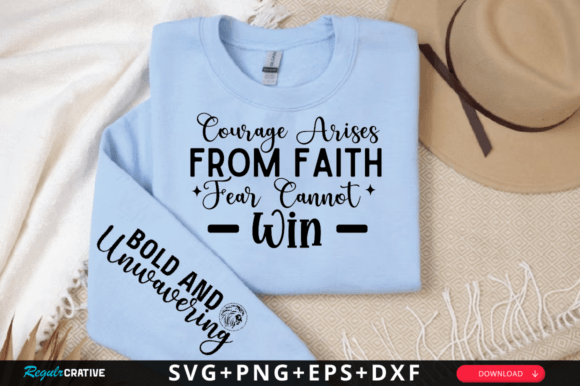
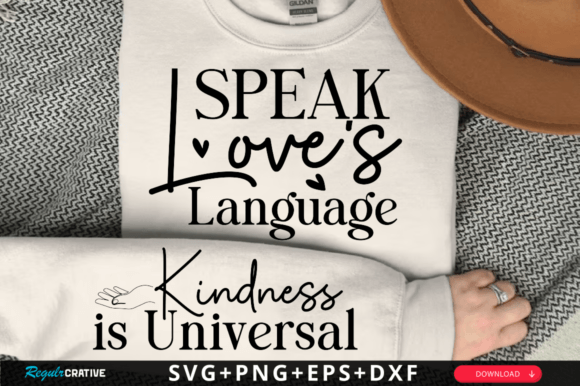
In practice, Faith over Fear Sleeve SVG Design performs exceptionally well across tactile and digital contexts. As a t-shirt design, it anchors the left sleeve or upper back with graceful proportion—no awkward stretching or distortion, even on curved mockups. On product labels and packaging design for a local apothecary line, it adds warmth without clutter. When scaled up for a 24"x36" event poster (think: community mindfulness retreat), the vector integrity holds—no pixelation, no loss of edge clarity.
It integrates seamlessly into social media graphics—especially Instagram carousels and Pinterest pins where mood-driven visuals drive engagement. As a sticker design or printable wall art component, its clean negative space allows easy layering over textured backgrounds (linen, kraft paper, watercolor scans). For Cricut projects or sublimation design workflows, the SVG paths are well-organized, with grouped layers and minimal anchor points—meaning faster weeding and smoother heat transfer.
I’ve tested it in Canva templates for email headers and blog banners: paired with a soft sans serif (like Poppins Light) and muted sage or terracotta tones, it reinforces brand identity without competing. And as part of a design bundle for an Etsy product launch, it adds thematic cohesion—especially when bundled with complementary SVGs like “Breathe,” “Rooted,” or minimalist botanical accents.
Strategic Placement: Hero Graphic vs. Supporting Element
Faith over Fear Sleeve SVG Design works best where intentionality matters—not as filler, but as focal punctuation. It excels in large layout areas: hero sections of Shopify product pages, front-and-center on tote bags, or as the central motif in a printable affirmation card set. In themed collections (e.g., “Mindful Merch” for a yoga studio), it becomes a unifying visual thread across mugs, journals, and digital ads.
It also functions elegantly as a decorative accent—scaled down to 1.5" for corner details on invitation suites or as a subtle watermark on editorial design layouts. But here’s the nuance: it’s not a logo design candidate. Its expressive line quality and contextual phrasing make it unsuitable for primary brand marks requiring scalability, neutrality, or trademark flexibility.
Where Caution Applies: Context Is Everything
This SVG design should be used carefully in minimalist branding systems—especially those built around ultra-thin type, monochrome palettes, or strict grid-based layouts. Its organic weight can disrupt visual hierarchy if placed beside ultra-clean sans serifs like Inter or Helvetica Neue without intentional breathing room.
Avoid using it at under 0.75" tall in print-on-demand applications—fine strokes begin to fill in during screen printing or DTG, risking legibility. It also loses impact on busy or low-contrast backgrounds (e.g., heather grey tees with charcoal ink, or patterned packaging). Always preview on real mockups—not just flat PNG previews.
Designer Notes: What to Verify Before Client Use
- Test in black and white: Confirm readability and stroke consistency without color reliance.
- Check contrast: Preview on both light and dark backgrounds—especially for web design and social media graphics.
- Scale rigorously: Zoom to 200% and shrink to 25% in your design software to assess edge fidelity and spacing.
- Inspect file structure: Open the SVG in Illustrator or Inkscape—verify grouped elements, unneeded layers, and editable text (if needed for customization).
- Review transparency: If a PNG version is included, check alpha channel integrity—no fringing or halo artifacts.
- Font compatibility test: Pair with serif (Cormorant Garamond), sans serif (Lato), script (Pacifico), and display fonts (Bebas Neue)—note how hierarchy shifts.
- Confirm commercial license: Ensure explicit permission for client-facing use—especially for print-on-demand, Etsy products, or SaaS platform integrations.
Final Verdict: A Thoughtful Addition to Your Creative Toolkit
Faith over Fear Sleeve SVG Design isn’t just another clipart download—it’s a considered creative design that supports emotional storytelling without sacrificing craft. For a handmade business seeking authentic connection, a small business branding initiative needing warmth and clarity, or a seasonal campaign centered on resilience, this graphic design asset delivers substance and style. It elevates marketing visuals by grounding them in sincerity—not slogans. When used intentionally—as part of a broader visual language rather than a standalone fix—it strengthens recognition, deepens audience engagement, and quietly signals professionalism. Just remember: great design assets don’t replace strategy—they amplify it. And this one? It amplifies well.